Should You Replace a Federal Pacific or Zinsco Panel?
October 1, 2024
How Many Christmas Lights Can One Outlet Handle?
December 1, 2024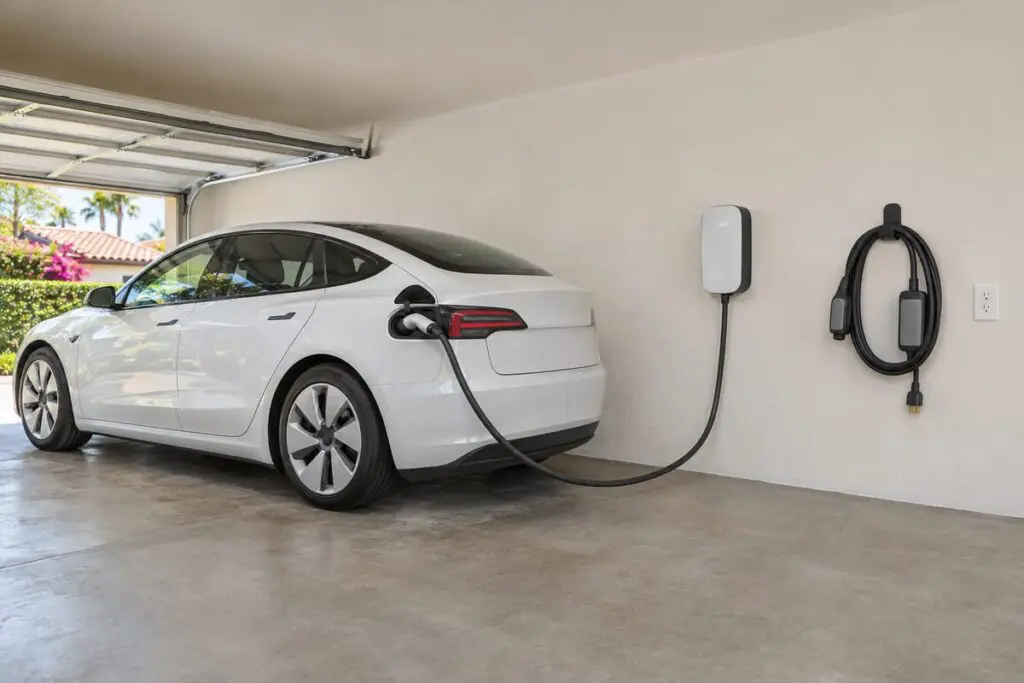
Level 1 vs. Level 2 EV charger: which do you need?
Level 1 is enough if you drive about 30 miles a day or less and your car sits at home 10 to 12 hours a night. Get Level 2 if you have a long commute, two EVs, a big-battery truck or SUV, or you want to charge only during off-peak hours.
Plenty of drivers never need more than the cord that came with the car. So if you’ve been plugging into the garage outlet and wondering whether you’re “supposed” to buy a real charger, you may already have the right setup.
Level 1 and Level 2 side by side
| Level 1 | Level 2 | |
|---|---|---|
| Power | Standard 120-volt outlet | 240 volts, like an electric dryer |
| Range added per hour | About 3 to 5 miles | About 20 to 40 miles, depending on charger and car |
| Overnight | About 30 to 50 miles in 10 hours | A full battery for most vehicles |
| Equipment | The cord that came with your car | A charger on its own 240-volt circuit |
Living with Level 1
Do the math on your own week. Say you drive 25 miles a day, plug in at 7 p.m. and leave at 7 the next morning. Twelve hours at 3 to 5 miles an hour puts back more than you used. That’s Level 1 doing exactly its job.
The catch is your outlet. Charging pulls a steady 12 amps for hours on end, and that’s hard on a receptacle. A few habits keep it safe:
- Use an outlet in good condition, not the loose one the shop vac lives on.
- Keep it on a circuit you don’t share with a freezer, garage door opener or power tools.
- Plug the cord straight into the wall. No extension cords.
- If the plug or outlet ever feels hot, stop charging and have it checked.
Who outgrows a regular outlet
Long commutes are common in the Inland Empire, and that’s where Level 1 runs out of road. If you drive 70 miles round trip, a night of Level 1 charging won’t put it all back, and you fall a little further behind every day. Level 2 is the better fit when:
- You commute long distances
- Two EVs share your garage
- You want to charge only in off-peak hours, which shrinks your charging window
- You drive a large-battery truck or SUV
What a Level 2 install involves
A Level 2 charger gets its own 240-volt circuit. Most home units deliver 32 to 48 amps, and because EV charging is a continuous load, the circuit is sized 25 percent bigger than the charger. A 32-amp charger goes on a 40-amp circuit. A 48-amp charger goes on a 60-amp circuit.
Before anything gets installed, an electrician runs a load calculation to confirm your service can carry the charger on top of everything else in your house. If it can’t, that doesn’t automatically mean a bigger panel. Our post on when to upgrade from a 100-amp to a 200-amp panel covers when a larger service is actually needed.
Cost mostly comes down to distance. The farther your parking spot is from your panel, the more wire and labor it takes, so think about where the car will live before you pick a spot for the charger.
Check for a rebate first
Riverside Public Utilities has offered a rebate on Level 2 chargers for its customers, and Southern California Edison runs its own programs. Terms change, so confirm the current offer and its requirements before you buy equipment.
Talk through your charging setup
Infiniti Electric is licensed and insured, and we handle EV charger installs for homes and businesses, from the load calculation to the final inspection. Get in touch and tell us what you drive and how far.
Home EV charging questions
Does a Level 2 charger need a permit?
Yes. A new 240-volt circuit is permitted electrical work, and the inspection confirms the circuit and breaker are sized for your charger.
Do plug-in hybrids need Level 2?
Usually not. Most plug-in hybrids have small batteries that refill overnight on a regular 120-volt outlet.
What if my panel doesn’t have room for a 48-amp charger?
Set the charger lower or add a load-management device. Either one often avoids a service upgrade, and a load calculation tells you which setting your home can carry.