How Many Christmas Lights Can One Outlet Handle?
December 1, 2024
How to Prepare Your Home for a Power Shutoff
February 1, 2025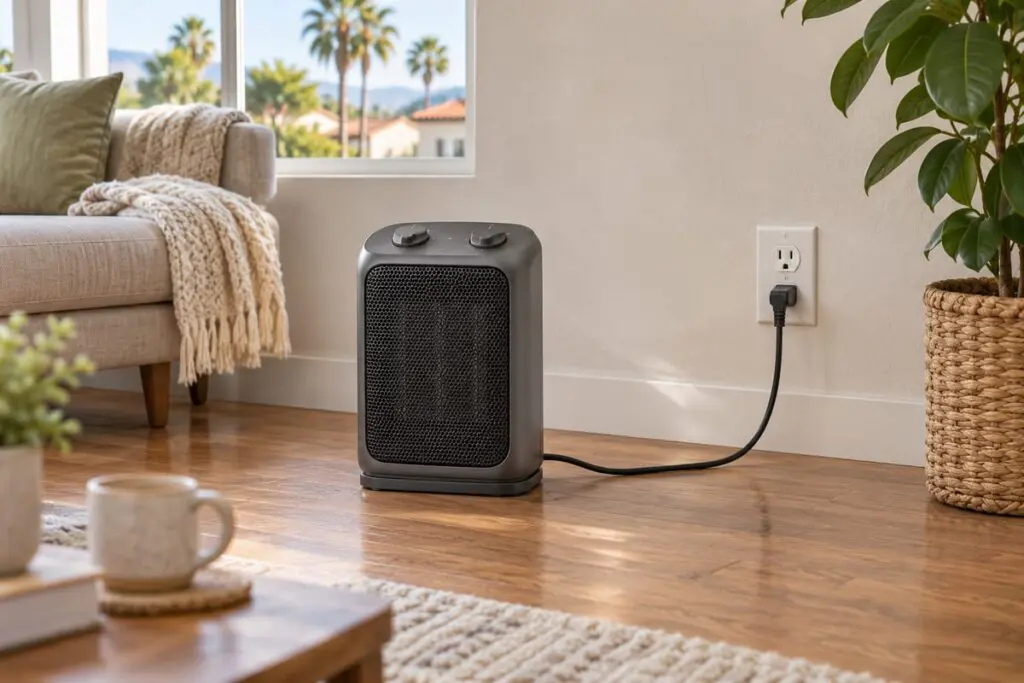
Why does my space heater keep tripping the breaker?
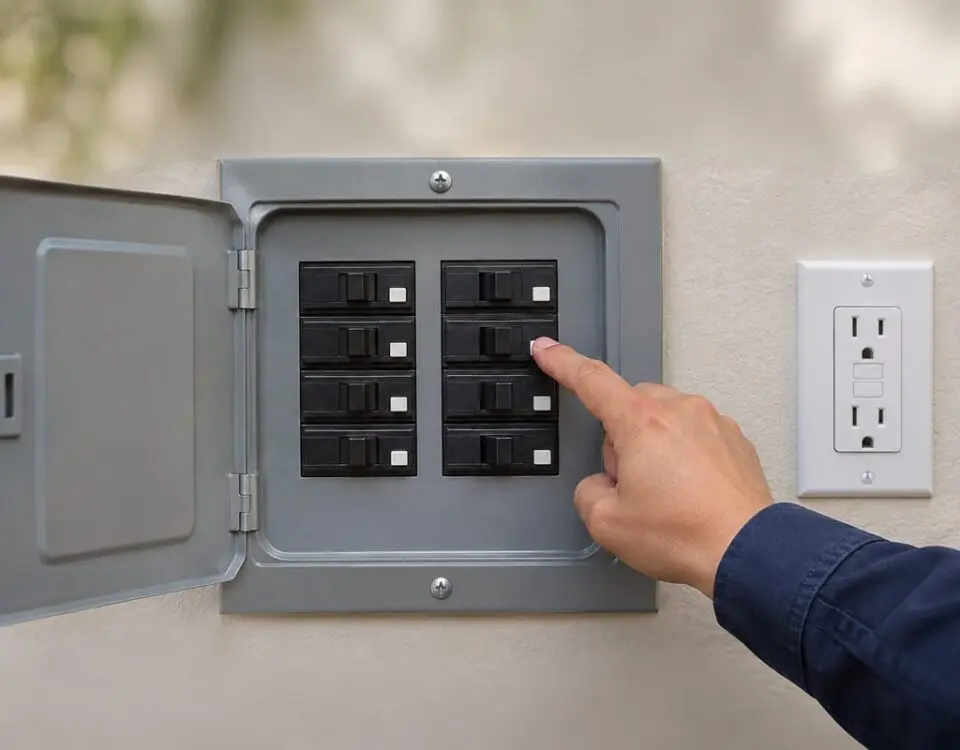
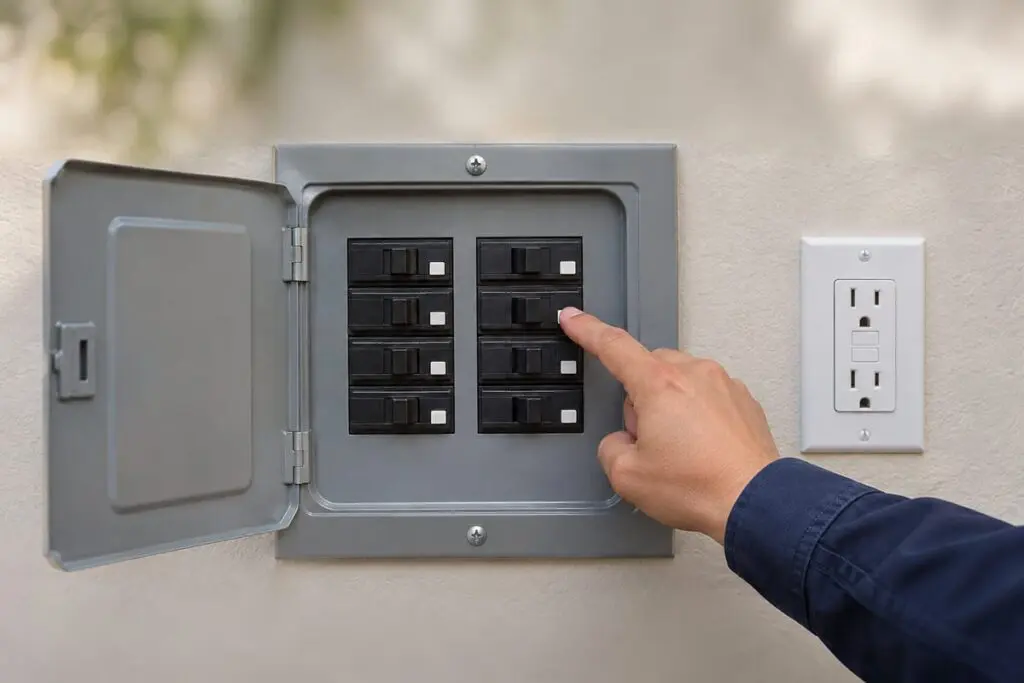
Most likely, the heater and the breaker are both fine. A typical space heater on high draws 1,500 watts, or 12.5 amps, and a standard 15-amp room circuit should carry only about 12 amps for a load that runs for hours. Your heater is over that line by itself, so one more appliance trips it.
The math behind the trip
Picture your back bedroom on a cold January night. The heater’s been running on high for an hour. Someone turns on the TV, or runs the vacuum down the hall, and everything goes dark.
Here’s what happened. A 15-amp circuit can technically handle 15 amps, but for something that runs for hours the planning limit is 12. Your heater alone pulls 12.5. Add a hair dryer or a vacuum and you’re well past 15, so the breaker does exactly what it’s built to do: it cuts power before the wires overheat.
And “nothing else is plugged in here” doesn’t mean much. One circuit usually feeds several outlets, often in more than one room. That vacuum in the hallway may be on the same circuit as your bedroom heater.
| Setup | Amps | On a 15-amp circuit |
|---|---|---|
| One heater on low (about 750 watts) | About 6 | Plenty of room |
| One heater on high (1,500 watts) | 12.5 | Over the 12-amp planning limit |
| Heater on high plus a vacuum or hair dryer | Well over 15 | Trips |
| Two heaters on high | 25 | Will not work |
A 20-amp circuit (2,400 watts) is a different story. It runs a 1,500-watt heater with room to spare.
What you can safely try tonight
- Switch the heater to low. At about 6 amps, it leaves room for other things.
- Unplug whatever else shares that circuit, including outlets in the next room.
- Move the heater to an outlet on a different circuit. Reset the tripped breaker once and see if it holds.
- Plug the heater straight into the wall. Never use a power strip or extension cord; the Consumer Product Safety Commission and heater manufacturers both warn that they can overheat.
If it trips with the heater alone on low, or the outlet or plug feels hot, stop using that outlet and call an electrician. That isn’t overload anymore.
When it’s the wiring, not the load
Some trips have nothing to do with math. Watch for these:
- A worn or loose outlet. The plug sags or falls out, the plug or faceplate gets hot, or you see brown marks around the slots.
- A damaged heater cord. Cracks, kinks or a scorched spot mean the heater is done.
- An arc-fault (AFCI) breaker tripping. AFCI breakers react to arcing, which can come from a worn outlet or cord. Treat that trip as a warning and don’t keep resetting it.
- An old, weak breaker that trips below its rating.
Our electrical troubleshooting visits sort out which one you’ve got. Infiniti Electric is available 24/7, so a hot outlet doesn’t have to wait until Monday.
Lasting fixes for a cold room
If you use the heater every winter in the same spot, a licensed electrician can run a dedicated 20-amp circuit and outlet there, or replace worn outlets with new ones. For a room that’s always cold, permanent heat such as a mini split often beats a heater you have to babysit.
Whatever you use, keep it three feet from anything that can burn, and turn it off when you leave the room or go to sleep. The National Fire Protection Association reports that space heaters are the type of heating equipment most often involved in home heating fires. Want help with a room that never warms up? Contact us and we’ll talk it through.
Space heater and breaker questions
Can I use a heavy-duty extension cord?
No. Plug a space heater directly into a wall outlet, which is what manufacturers and the Consumer Product Safety Commission recommend. If the cord won’t reach, move the heater or have an outlet added.
Will a 20-amp circuit run a 1,500-watt heater?
Yes, with room to spare. A 20-amp circuit can carry 2,400 watts, so a 1,500-watt heater uses well under its long-running limit.
Is it normal for the plug to get warm?
A hot plug is not normal. Heat at the plug or faceplate usually means a worn outlet or a poor connection, so stop using that outlet and have it checked.
Why does it trip only when the microwave or vacuum runs?
Because that appliance is on the same circuit as your heater. The heater fills most of the circuit, and the extra load pushes it over.