

Standby Generator vs. Home Battery Backup
September 1, 2026
Motion Sensor vs. Dusk-to-Dawn Outdoor Lights
November 1, 2026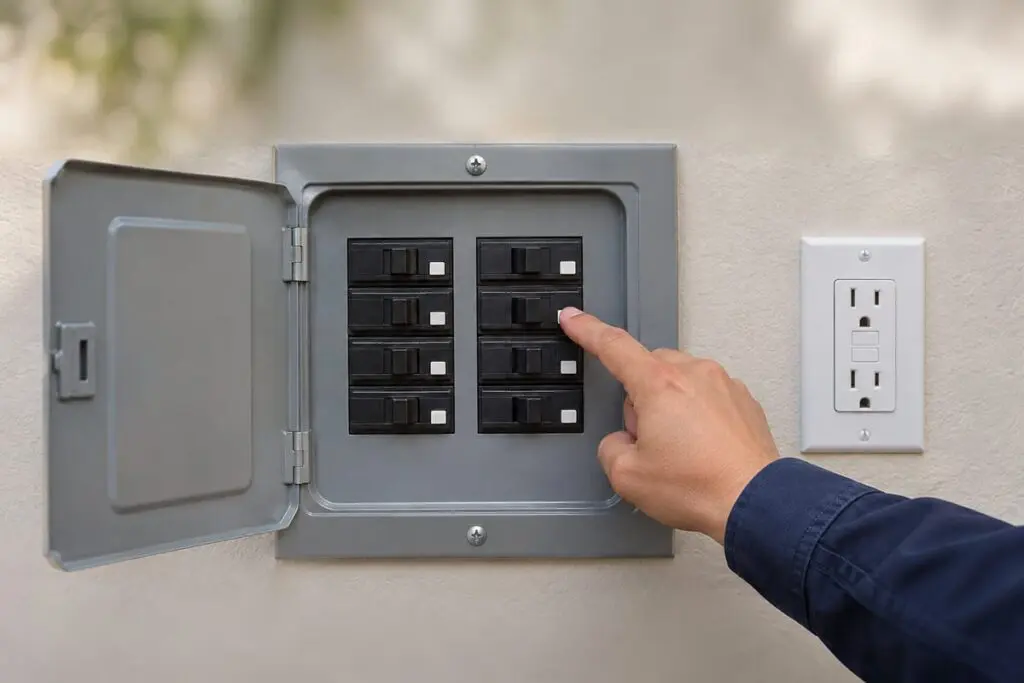
What’s the difference between a GFCI and an AFCI?
A GFCI protects people from shock, and an AFCI protects your house from fire. A GFCI cuts power when current leaks somewhere it shouldn’t, like through a person. An AFCI cuts power when it detects arcing, the sparking that starts electrical fires inside walls and cords. Most homes need both, in different rooms.
So if an inspection report or a quote says “add AFCI/GFCI protection,” it’s asking for two separate safety upgrades. Here’s what each one does and whether it’s worth doing.
GFCI vs AFCI side by side
| GFCI | AFCI | |
|---|---|---|
| Protects against | Shock | Fire |
| What it watches for | Current going missing (about 5 milliamps) | The electrical signature of arcing |
| Where it’s required | Wherever water and electricity meet | Most living areas |
| Usual form | An outlet with TEST and RESET buttons, or a breaker | A breaker in your panel |
How a GFCI stops a shock
Every circuit is a loop. Current goes out on one wire and comes back on another, and the two should match. A GFCI compares them constantly. If about 5 milliamps goes missing, it trips in a fraction of a second, because that missing current may be passing through a person on its way to ground.
Picture a hair dryer slipping into a full sink. Without a GFCI, the circuit breaker sees nothing wrong, since a breaker only cares about too much current. The GFCI notices the leak and shuts off before the shock can do real harm.
That’s why GFCI protection is required where water is around: bathrooms, kitchens, garages, outdoors, laundry areas, basements and crawl spaces, near sinks, and around pools and spas. If you need GFCI outlets added, our new outlet and GFCI installation service handles it.
How an AFCI prevents a fire
October is Fire Prevention Month, and the AFCI is the fire-prevention device hiding in your panel. Most people have never looked at one.
An AFCI listens to the circuit for the pattern of arcing. Arcing is what happens at a lamp cord crushed under a bed leg, at a loose wire on an outlet, or where a picture-hanging nail went through a cable inside a wall. Those sparks can smolder for a long time without ever drawing enough current to trip a regular breaker. The AFCI recognizes the pattern and shuts the circuit off.
AFCI protection is required in most living areas: bedrooms, living rooms, hallways and closets, and under current code, kitchens and laundry areas too.
What a trip is telling you
A trip is information. A GFCI that trips usually points to moisture, like a wet outdoor outlet, or an appliance that’s leaking current. An AFCI that trips points to a worn cord, a loose connection or a failing motor in an appliance.
Start by unplugging what’s on that circuit, then reset the device once. If it trips again with nothing plugged in, the problem is in the wiring, and it’s time for electrical troubleshooting by a licensed electrician. If it holds, one of the things you unplugged is the likely cause, so check their cords for damage and leave anything suspect unplugged. Never remove the device to stop the trips. That removes the warning and leaves the problem in place. And if you smell burning or see smoke, get out and call the fire department first.
Adding protection to an older home
Older homes often have little of either. The protection usually gets added when outlets or circuits are replaced or extended. Some older panels can’t accept modern AFCI breakers at all, which is one more reason outdated electrical panels get replaced. Infiniti Electric is licensed and insured, and we can tell you what your home needs now and what can wait. Contact us to have someone take a look.
GFCI and AFCI questions homeowners ask
Can one device do both jobs?
Yes. A dual-function breaker gives a circuit both GFCI and AFCI protection from the panel, which is handy for kitchens and laundry areas that need both.
How often should I test GFCI and AFCI devices?
Monthly, according to the manufacturers. Press TEST and the device should cut power, then press RESET (or flip the breaker back on) to restore it. A device that won’t trip or won’t reset needs replacing.
Is it safe to keep resetting a GFCI that trips every day?
No. A daily trip means something on that circuit is leaking current or getting wet, and resetting it over and over only ignores the warning. Find the cause, or have an electrician find it.