Does a Mini Split Need a Dedicated Circuit?
July 1, 2024
What Size Generator Do I Need for My House?
September 1, 2024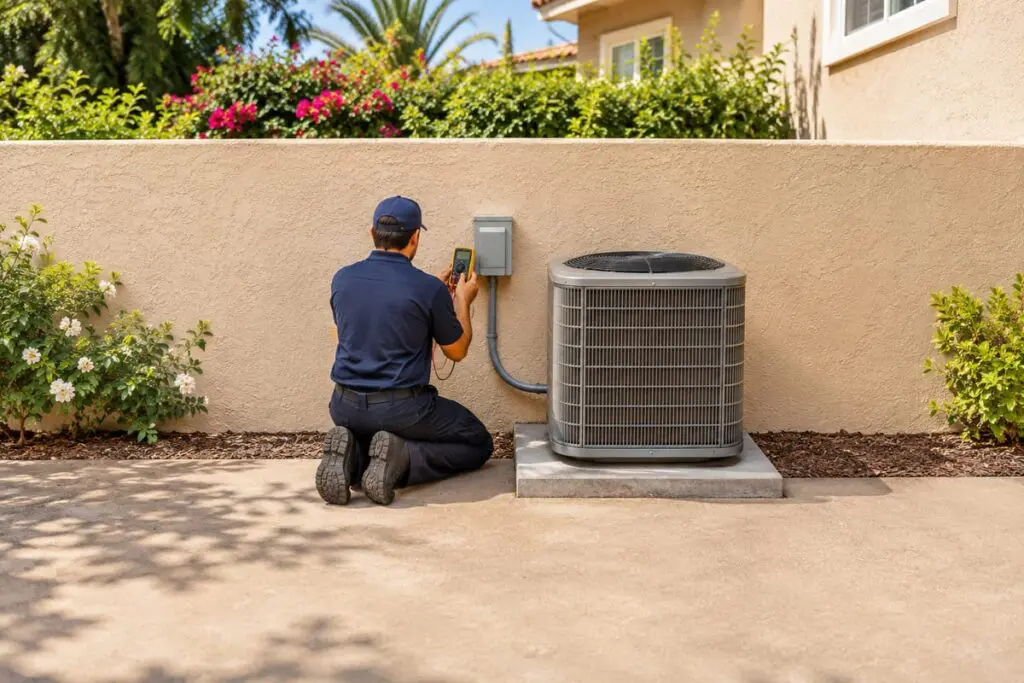
Why does my AC keep tripping the breaker?
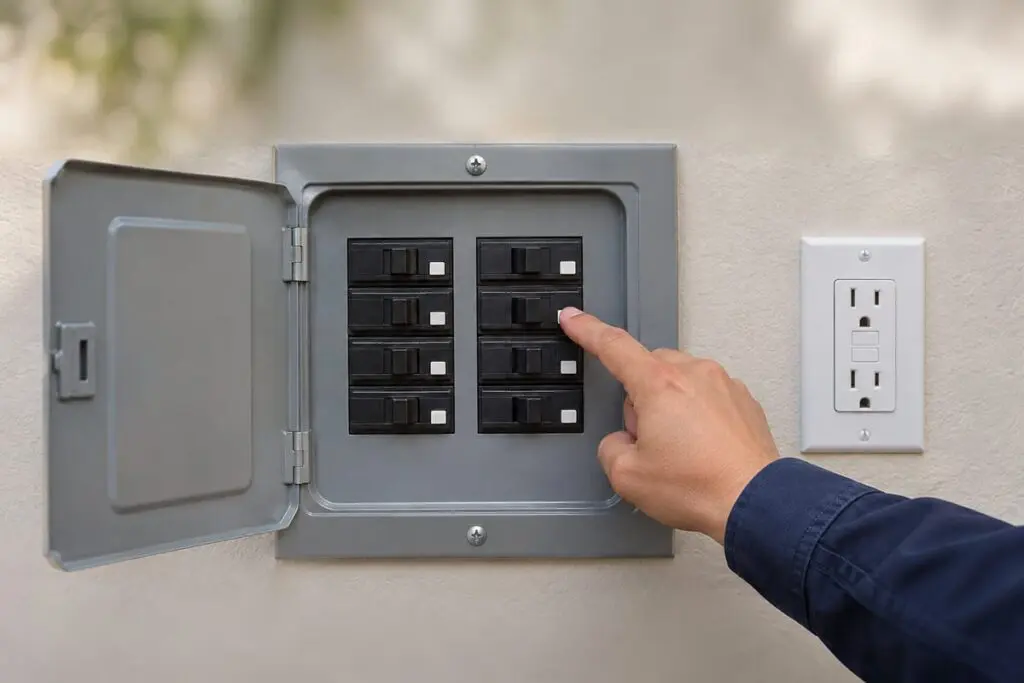
Your AC keeps tripping the breaker because it’s pulling more current than its circuit is built to carry, or because something inside it has shorted or faulted to ground. Either way, the breaker is the messenger. It cuts power before your wiring overheats, and resetting it again and again only silences the message.
August in Riverside is when this shows up. Picture it: it’s 104 outside, your system has been running since noon, and the house suddenly goes quiet. You flip the breaker back on. Twenty minutes later, it trips again.
Reset it once, then check the easy things
One reset is fair. If the breaker trips a second time, leave it off. Every reset pushes current back into whatever is wrong, which overheats wiring and can finish off a struggling compressor.
While the power is off, you can safely rule out a few common causes yourself:
- Change your air filter. A clogged filter chokes airflow, so your system runs longer and hotter. If you can’t remember the last time you changed it, start here.
- Clear around your outdoor unit. With the power off, pull leaves, dust and plants away so the unit has about two feet of open space around it. A condenser buried in shrubs can’t get rid of its heat.
- Write down when it trips. Does it go the instant the AC starts, or after it has run a while? That timing is the best clue you can give whoever diagnoses it.
What the timing of the trip tells you
It trips within seconds of starting
That points to startup. Your AC’s capacitor gives the compressor and fan motor a kick to get them spinning. When the capacitor weakens, the motor strains and draws heavy current until the breaker gives up. A hard-starting or failing compressor does the same thing. So does a shorted or grounded part, like wire insulation that has rubbed through or a motor winding that has failed. A short doesn’t heal if you let it cool off, so don’t keep trying.
It trips after running a while
Now you’re looking at heat that builds over time. Restricted airflow or a dirty condenser coil makes the system overheat, and a failing fan motor can do it too. Loose connections are another suspect. They show up at the outdoor disconnect, at the contactor (the switch that turns your compressor on) and at your panel, and they run hot enough to scorch the terminals. Sometimes the breaker itself is just worn out. Sorting out which one you have is what our electrical troubleshooting visits are for.
Why a bigger breaker is never the answer
It’s tempting. Swap in a larger breaker and the tripping stops. But your breaker protects the wire behind it, and an oversized breaker lets that wire overheat inside your walls without ever shutting off.
Take a look at the nameplate on your outdoor unit. It lists a minimum circuit ampacity and a maximum breaker size. If a replacement AC went onto your old circuit and nobody checked those two numbers, your breaker and wiring may not match your equipment.
A breaker that feels hot, a burning smell, buzzing or scorch marks all mean you should keep the AC off and have your electrical panel inspected. If you smell burning or see smoke, get everyone out of the house and call the fire department first.
Get the cause found before the next heat wave
Infiniti Electric is licensed and insured, and we’re available 24/7, which matters when your house is heating up by the hour. Get in touch with us and tell us when your breaker trips, so we show up ready.
More answers about AC breaker trips
Why does my AC only trip the breaker on the hottest days?
Because heat makes your compressor work harder. The hotter it is outside, the higher the pressure your compressor pushes against, so it draws more current. A weak capacitor or dirty coil that copes at 90 degrees can tip the breaker at 105.
Can a bad breaker be the real problem?
Yes. Breakers wear out, especially after many trips, and can start tripping below their rating. An electrician confirms it by measuring your AC’s running current and comparing it with the unit’s nameplate before replacing anything.
Should I call an HVAC company or an electrician first?
Call based on where the trouble seems to be. An HVAC technician handles refrigerant, coils and motors, while an electrician handles the circuit, the disconnect, the breaker and the panel. If you see heat or scorching at your panel, or your AC is new and the circuit isn’t, start with an electrician.