What Size Generator Do I Need for My House?
September 1, 2024
Level 1 vs. Level 2 EV Charging at Home
November 1, 2024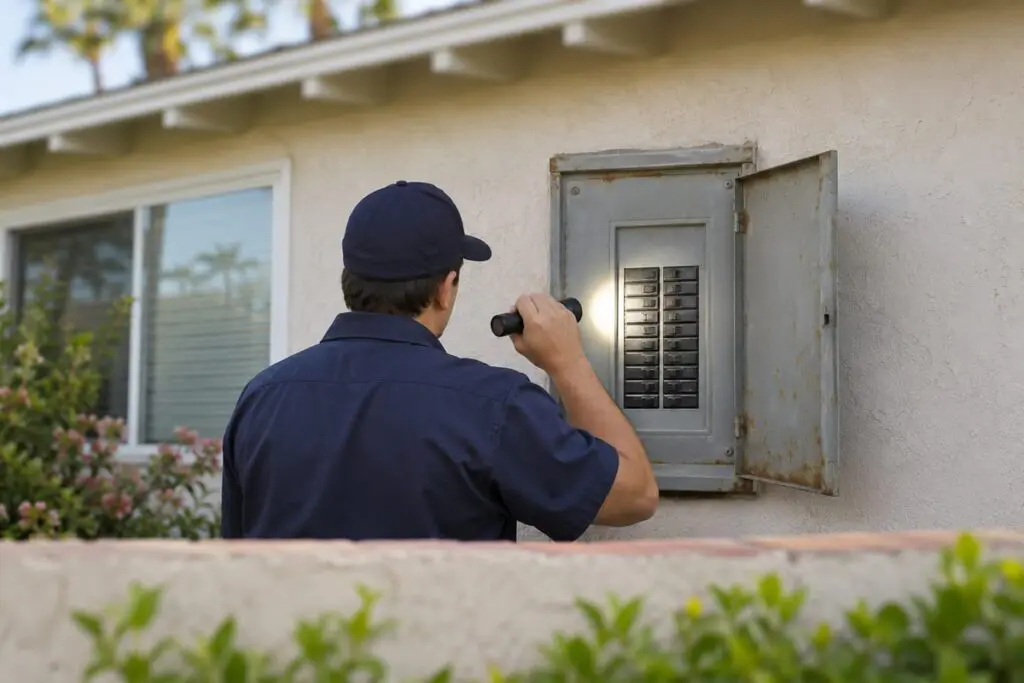
Should you replace a Federal Pacific or Zinsco panel?
Yes. Federal Pacific Electric (FPE) panels with Stab-Lok breakers, and Zinsco panels, have a history of breakers that fail to trip during an overload or short circuit. A breaker that doesn’t trip lets your wiring overheat, and that’s how electrical fires start. Replacing the whole panel is the fix electricians recommend.
Maybe a home inspector flagged yours. Maybe a neighbor glanced at it and said “oh, that’s one of the bad ones.” Either way, October is Fire Prevention Month, which makes it a good time to find out what’s really behind your panel door.
What’s actually wrong with these panels
Both brands went into a lot of homes from the 1950s through the 1980s, so if you own or are buying a house from the ’60s or ’70s, the odds are real. The problems differ by brand.
Federal Pacific Stab-Lok
Independent testing found that a significant share of Stab-Lok breakers didn’t trip the way they were designed to. Here’s the honest part: there was never a recall. The Consumer Product Safety Commission investigated in the early 1980s and closed its investigation in 1983 without one. That doesn’t clear the breakers. They can also sit loosely on the bus bar (the metal strip that feeds power to each breaker), and a loose fit arcs and builds heat.
Zinsco
Zinsco breakers clip onto aluminum bus bars that corrode and overheat over the years. In the worst case a breaker fuses to the bus bar. Its handle says off, and current keeps flowing anyway. Because the damage hides behind the breakers, a panel can look fine from the front for a long time.
How to tell what’s in your wall
Open the panel door and read the label. Don’t remove the inner cover, which exposes live parts.
- Federal Pacific: “Federal Pacific Electric” or “FPE” on the door or label, with “Stab-Lok” printed near the breakers. Many of the breakers have a red or orange strip across the handle.
- Zinsco: a label that reads “Zinsco,” “Sylvania” or “GTE-Sylvania.” The breakers are often brightly colored, in reds, blues and greens, stacked in a narrow vertical row.
Not sure? Snap a photo of the label. An electrician can usually tell from that.
Warning signs that can’t wait
- A breaker or the panel cover feels warm
- A burning smell at the panel
- Buzzing or crackling
- Scorch marks around a breaker
- A breaker that won’t reset
Any one of these means call an electrician now, before you plan anything else. If you see smoke, get out of the house and call the fire department first.
What a Federal Pacific panel replacement looks like
It’s permitted work, and it usually takes about a day. The utility disconnects your power, the electrician installs a new panel and breakers and reconnects each circuit, an inspector signs off, and your power comes back on. Our electrical panel page covers what we install.
Since you’re replacing the panel anyway, it’s the right moment to think about capacity. Planning an EV charger, a heat pump or an addition? A load calculation shows whether a same-size panel will do or whether you need more. Our post on when to upgrade from a 100-amp to a 200-amp panel walks through that call.
Get a straight answer about your panel
Infiniti Electric is licensed and insured, and we replace older panels in homes and businesses across Riverside. Send us a photo of your panel label or book a visit, and we’ll tell you what you’ve got.
Federal Pacific and Zinsco questions we hear
Is it illegal to have a Federal Pacific panel?
No. Owning one isn’t illegal, and no recall ever required its removal. The reasons to replace it are safety and insurability.
Can I just swap the breakers for new ones?
You can buy replacement breakers, but they don’t fix the bus design or the panel’s age. That’s why electricians generally recommend replacing the whole panel.
Will insurance cover a house with a Zinsco or FPE panel?
Some insurers won’t, and others add a surcharge. It also tends to come up in home-sale inspections, so ask your insurance agent before you buy or renew.