
Why Do My Lights Dim When the AC Turns On?
July 1, 2025
Hardwired vs. Plug-In EV Charger: Which Is Better?
September 1, 2025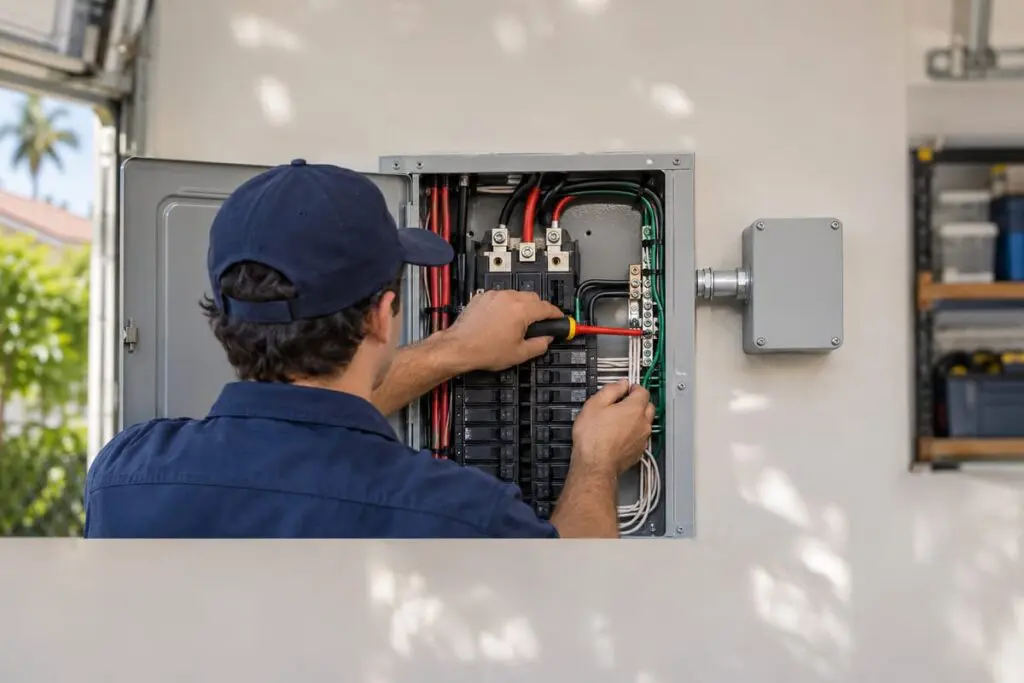
Is a whole-home surge protector worth it?
For most homes, yes. A whole home surge protector mounts at your electrical panel and diverts voltage spikes before they travel down your circuits. Your AC, refrigerator, washer and garage door opener all run on circuit boards now, and the device is a small cost next to replacing even one of those boards. It won’t stop a direct lightning strike, though.
Where surges come from, and why August is rough on your electronics
Picture a heat wave. The grid is strained, your power blinks off for an hour, and when the utility brings it back, the restoration can send a spike through your service. Utility switching and nearby lightning do the same, and late-summer monsoon moisture brings the occasional thunderstorm to the Inland Empire.
The bigger surprise is that many surges start inside your own house. Every time a large motor shuts off, like your AC compressor at the end of a cycle, it kicks a small spike back into your wiring. You’ll never notice one. But they happen many times a day, all summer, and they wear down electronics a little at a time. That’s how a control board can quit on a calm afternoon with no storm in sight.
What’s actually at risk in your home
Anything with a circuit board, which now means most of the expensive stuff:
- HVAC equipment, including the control boards in your furnace and outdoor unit
- Refrigerators, washers, dryers and ovens
- Garage door openers and EV chargers
- LED lighting and smart devices like thermostats, doorbells and switches
A plug-in power strip can’t protect a hardwired furnace or a range. A device at your panel covers every circuit at once.
What a whole-home surge protector can’t do
Two limits. First, no surge device makes a home immune to a direct lightning strike.
Second, a whole home surge protector doesn’t replace point-of-use protection. Keep good plug-in surge strips on your computers, TVs and home office gear. The panel device knocks big spikes down to a level the strip can handle, and the strip catches what’s left right at the plug. That’s layered protection, and it’s the setup that works.
One more thing people don’t expect: these devices wear out as they absorb surges. Glance at the indicator light now and then, and always after an outage, a storm or any big electrical event. When the light goes out, the device is spent and needs replacing.
What to look for and how it’s installed
Choosing the device
- A UL 1449 listing, the safety standard for surge protective devices.
- Type 1 or Type 2. A Type 1 unit can be installed ahead of your main breaker. A Type 2 unit installs at the panel.
- The surge current rating, which tells you how large a surge the unit is built to handle.
- An indicator light, so you can tell at a glance that it’s still working.
The installation
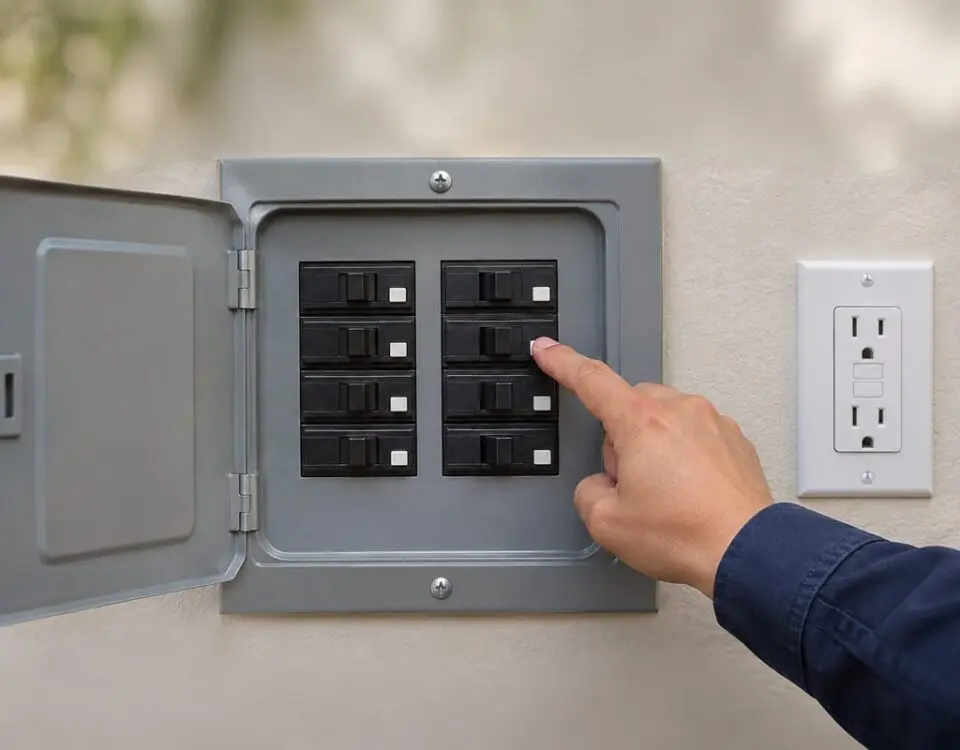
The device is wired to a breaker inside your electrical panel with short leads, so you need open breaker space. Because that’s work inside the panel, it’s a job for a licensed electrician, and a short one. If you’re already planning a panel replacement or one of our service upgrades, that’s the easiest time to add it.
Infiniti Electric is licensed, insured and bonded, and we do residential and commercial work across Riverside. If outages are your bigger worry, our post on preparing your home for a public safety power shutoff covers the rest.
Getting surge protection for your home
Think about which appliances you’d hate to replace, then contact us and we’ll look at your panel and tell you honestly whether it makes sense for your home.
Whole-home surge protector questions
Is surge protection required by code in California?
Yes, for new or replaced electrical service. Current electrical code requires surge protection whenever a home’s service is installed or replaced, and California adopted that requirement in the code that took effect in 2023. Existing homes don’t have to add it, which is why most older homes have none.
How long does a whole-home surge protector last?
Until it has absorbed enough surges to use up its capacity, so there’s no fixed number of years. A home that sees frequent outages and storms will wear one out sooner. The indicator light tells you when it’s done.
Can I install a whole-home surge protector myself?
No, not safely. The device connects to a breaker inside your electrical panel, and working in a panel carries a real shock risk. Have a licensed electrician install it.